
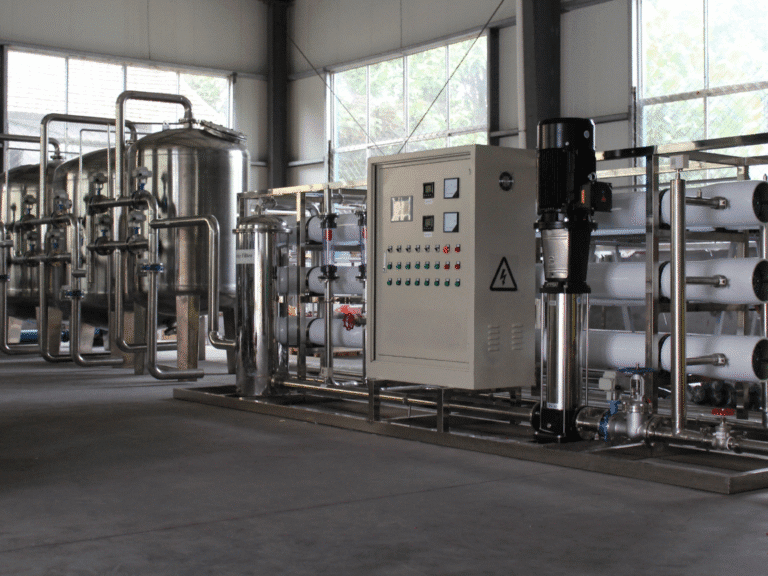
Reverse Osmosis (RO) is one of the most widely used and most effective water purification technologies in the world. Whether applied in household drinking systems, industrial production, or large-scale seawater desalination, RO systems can reliably remove a broad range of contaminants and ensure high-quality purified water.
This guide explains what RO is, how it works, what pollutants it removes, and which industries rely on RO systems—making it ideal for beginners and professionals alike.
1. What Is Reverse Osmosis?
Reverse Osmosis (RO) is a membrane-based water purification technology that uses high pressure to force water through a semi-permeable membrane. The membrane allows water molecules to pass while blocking dissolved salts, organic matter, heavy metals, bacteria, and other impurities.
RO is currently considered one of the most stable and efficient deep-purification technologies available.
Core features of RO include:
- High salt rejection rate (up to 98–99%)
- Removal of particles, ions, microorganisms, and dissolved solids
- Automatic and continuous operation
- Widely applicable across domestic, commercial, and industrial fields
2. How Reverse Osmosis Works
The working mechanism of RO involves applying high pressure to the feed water, forcing pure water molecules through the RO membrane while rejecting contaminants on the other side.
Basic RO Process
- Pre-filtration
Removes sediment, chlorine, suspended solids, and organic compounds to protect the RO membrane. - High-Pressure Pump
Provides the necessary pressure to overcome natural osmotic pressure. - RO Membrane Separation
Pure water passes through the membrane; contaminants are concentrated and discharged. - Post-treatment (optional)
Includes UV sterilization, remineralization, EDI polishing, or activated carbon finishing.
3. What Contaminants Does RO Remove?
Reverse Osmosis is highly effective at removing over 99% of common pollutants, including:
Inorganic & Chemical Contaminants
- Dissolved salts (TDS)
- Hardness ions (Ca²⁺, Mg²⁺)
- Nitrates, sulfates, fluorides
- Heavy metals: Lead, arsenic, mercury, chromium
- Radioactive substances
Organic Pollutants
- Pesticides
- Industrial solvents
- VOCs
- Organic matter (color/odor-causing substances)
Microbiological Impurities
- Bacteria
- Viruses
- Protozoa
- Colloids and suspended solids
Taste & Odor
- Chlorine by-products
- Metal taste
- Odor-forming compounds
Because of its comprehensive removal capabilities, RO is widely recognized as a high-purity water solution.
4. Where Is Reverse Osmosis Used?
RO technology is applied across multiple industries, including:
Drinking Water & Commercial Applications
- Household RO purifiers
- Restaurants and beverage shops
- Hotels and cafés
- Ice-making machines
Industrial Applications
- Electronics and semiconductor manufacturing
- Pharmaceutical water production
- Power plant boiler feedwater
- Chemical production
- Food & beverage processing
Large-Scale Projects
- Municipal water treatment
- Seawater desalination
- Wastewater recycling and reuse
Its flexibility and high efficiency make RO essential in both household and industrial water purification.
5. Conclusion
Reverse Osmosis is a powerful and reliable purification technology capable of producing high-purity water for various industries. With its excellent contaminant removal performance, stable output, and broad applicability, RO has become the core technology for modern water treatment.
Whether you are a beginner researching RO Water Purification or a business evaluating professional equipment, understanding how RO works helps you choose the most suitable system for your needs.