Water Vending and Filling Machine Solutions
Our water vending and filling machine solutions support both packaged sachet-water production and self-service community water vending, built around suitable water treatment.
Years of Experience
Countries Served
Customer Satisfaction
RO-based purified-water preparation
Automatic sachet packaging
24-hour self-service vending
Project configuration by local market
Choose how your market will buy purified water
Build a packaged sachet water operation, launch a community refill station, or combine both around a properly engineered water treatment system.
Source-water led
Configuration starts with analysis
Market-specific
Packaging, payment and climate options
One engineering team
Treatment through final dispensing

SIDE-BY-SIDE COMPARISON
Compare sachet water filling and community water vending solutions, including treatment, packaging, payment, capacity and project configuration options.
| Decision | Sachet Water | Water Vending |
|---|---|---|
| Customer buys | A sealed water pouch | A measured refill |
| Sales channel | Retail, wholesale and distribution | Fixed community or commercial location |
| Main operation | Production, packing and delivery | Site service, sanitation and replenishment |
| Key configuration | Sachet size, film and hourly output | Daily demand, payment, cabinet and climate |
| Best starting data | Water report, package size and sales forecast | Water report, site, demand and payment method |
01. Choose Your Sales Model
Sell sealed sachets—or let customers refill directly
Both routes start with treated water, but packaging, sales channels, staffing and customer experience are different.
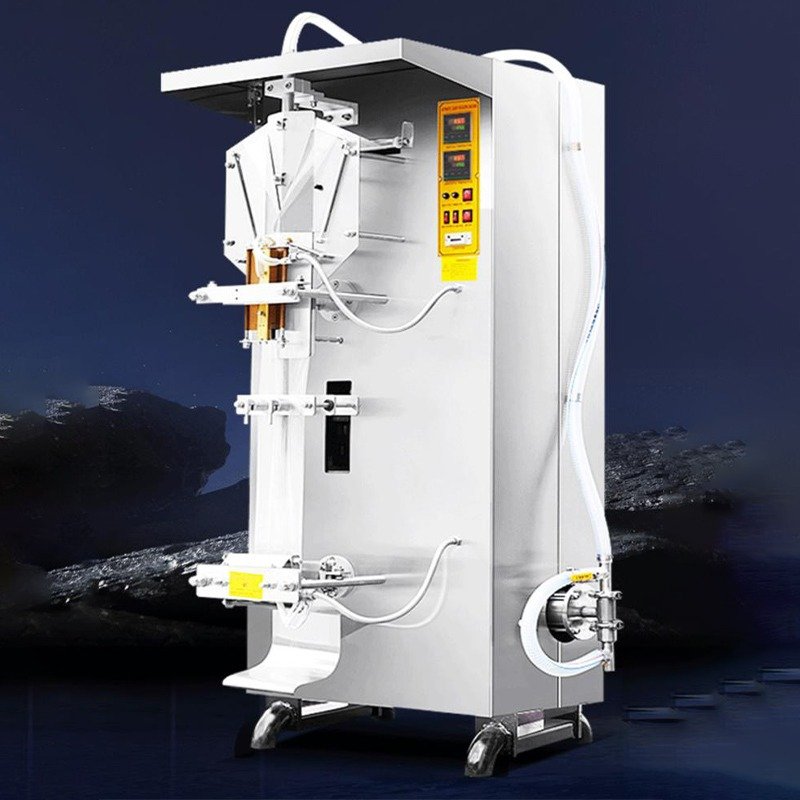
MODEL A·PACKAGED WATER
Sachet Water Production
Produce sealed, single-serve water sachets for retail shops, wholesalers and local distribution networks.
- Automatic forming, filling, sealing and cutting
- Packaging size, film and output configuration
- Suitable for packaged drinking-water production
- Useful where low-cost single-serve packaged water has local demand
- Current Aquaclarion site markets up to 19-37 sachets/min
Site Output Reference
Up to 2,100 sachets/hour
Current Product Speed
19–37 bags/min
Machine Body
Stainless Steel
Packaging
Thermal Cutting / Back Sealing
Sachet Volume
50–500 mL / 200-1000mL
MODEL
SJ-1000/SJ-2000
RATED POWER
1.6KW / 2.5KW
Voltage
220V/50HZ | 380V/50HZ | Custom
Net product weight
275KG / 380KG
Automatic Process
Form · Fill · Seal · Cut · Count
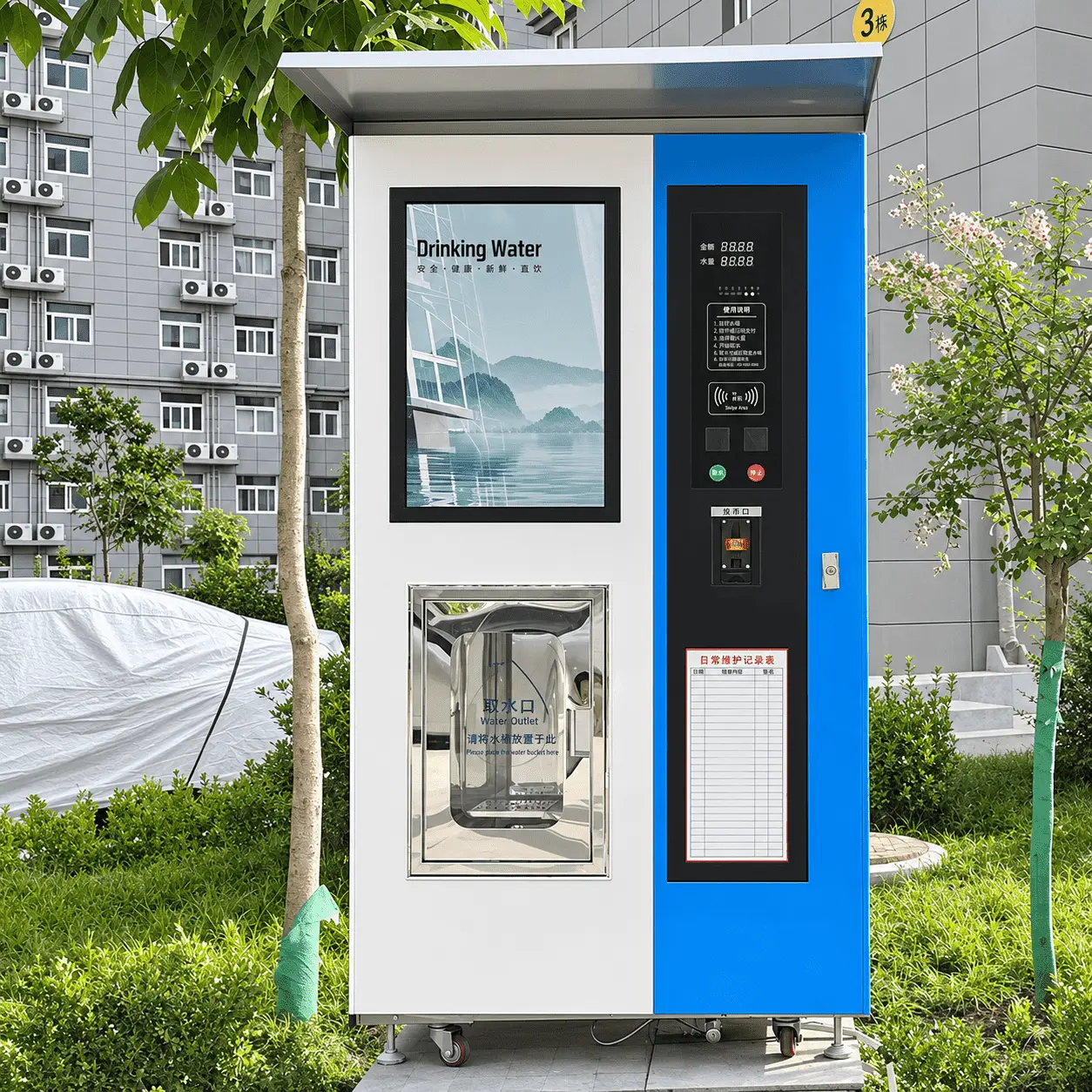
MODEL B · REFILL WATER
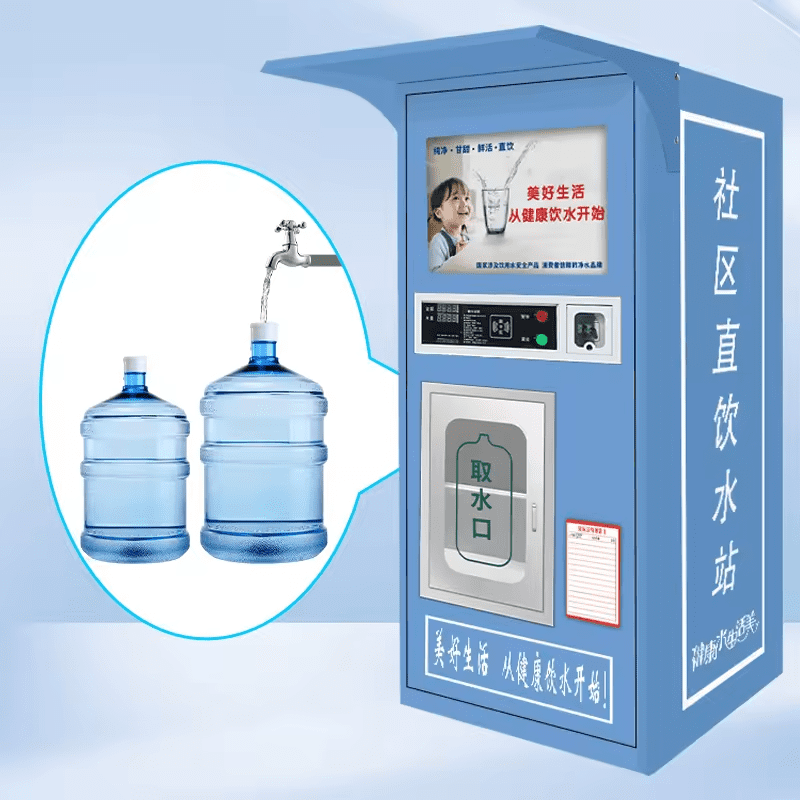
Community Water Vending
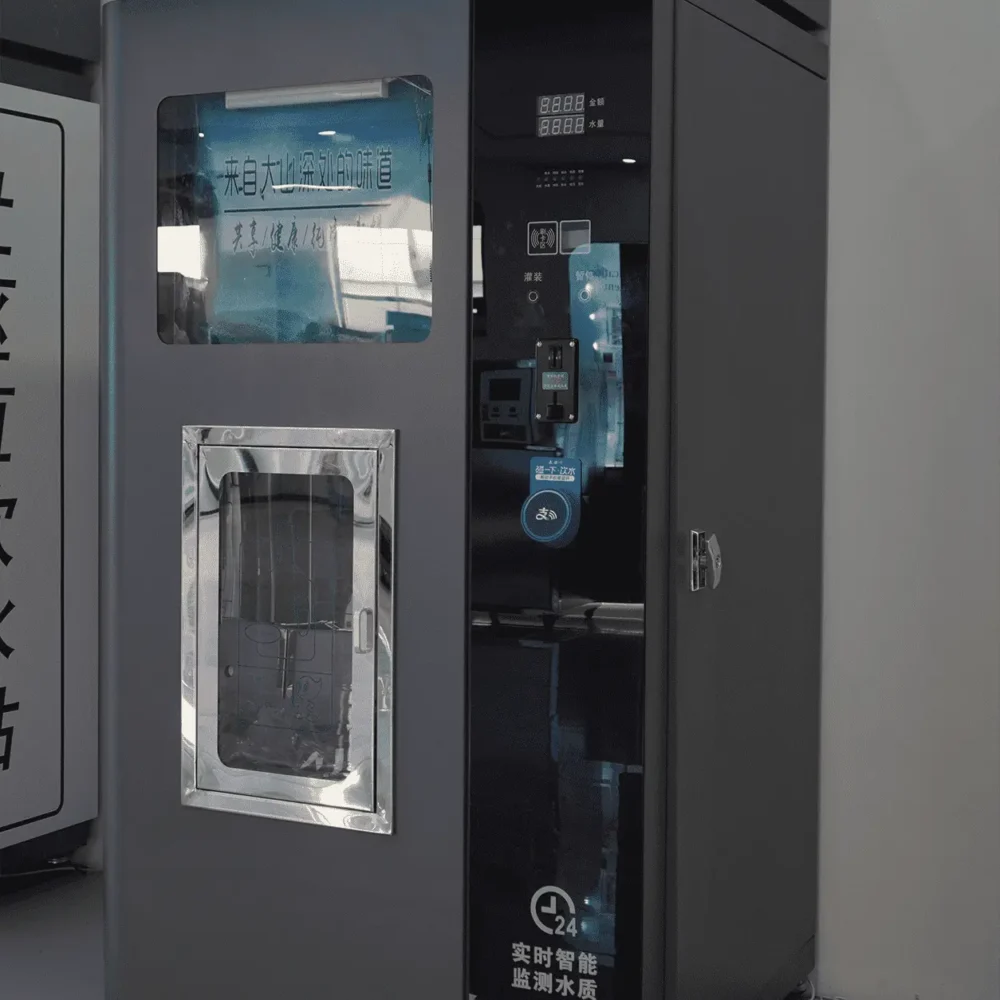
Operate a fixed self-service point where customers pay and collect treated water in reusable containers.
- Integrated purification, storage and dispensing
- Coin, card, QR and local payment options
- Outdoor cabinet and climate configurations
- 24-hour self-service operation
- 800 / 1200 / 1600 GPD project platforms currently shown on Aquaclarion
Current Platforms
800 / 1200 / 1600 GPD
Operation
24-Hour Self-Service
Treatment
PP+RO + UV+Ozone
Payment
Coin · NFC Card · QR
Monitoring
IoT / Real-Time Options
Material
All-polyurethane / Carbon steel
Rated power
220-440W
Voltage
220V/50HZ | 380V/50HZ | Custom
Water outlet
1 / 2 / 3 PCS
Climate Option
Low-Temperature Protection
How to Start a Water Refilling Station Business
Planning a water refilling station involves more than choosing a vending machine. Start with local demand, water quality, site conditions and the operating model, then select equipment that fits the project.
1. Choose a Suitable Location and Business Model
Review local demand, foot traffic, access to utilities, competition, operating hours and whether customers will refill containers or buy packaged sachets.
2. Select a Water Purification System
Identify the source-water type and obtain a water analysis where possible. Select pretreatment, RO and disinfection stages based on target water quality and applicable local requirements.
3. Choose Water Vending Equipment
Match daily demand, storage, dispensing outlets, payment methods, cabinet design and climate options to the project location.
4. Plan Installation, Maintenance and Water Testing
Confirm electrical supply, drainage, plumbing, cleaning routines, filter replacement, water-quality testing and local operating responsibilities.
Water Refilling Business Cost Considerations
Use the business calculator below to estimate sales volume and gross revenue. Include the following costs when planning your water refilling business.
Initial Investment
Equipment purchase, shipping, installation, site preparation and local permits or approvals.
Operating Costs
Source water, electricity, filters, RO membranes, cleaning, rent, labor and payment fees.
Maintenance & Compliance
Routine service, water testing, sanitation, replacement parts and applicable local compliance costs.
Important: The calculator estimates gross water sales only. It does not calculate net profit or payback period, or guarantee business performance. Actual results depend on local demand, pricing, operating costs and machine utilization.
Estimate production or water-sales volume
This is deliberately a planning tool—not a profit guarantee. Actual costs depend on water, electricity, labor, packaging, rent, maintenance and local market conditions.
How many sachets could the machine package?
The current Aquaclarion site references up to 2,100 sachets/hour; actual output depends on machine model, pouch size, film, filling conditions and uptime.
What gross water sales could a refill point generate?
Gross sales only. This does not include source water, electricity, filters, RO membrane, payment fees, cleaning, service, rent, taxes or machine investment.
05 · RELEVANT PROJECT / APPLICATION INQUIRY
Tell us how you plan to sell the water
Free Engineering Consultation
Our water treatment experts are ready to support your project from design to commissioning.
- System configuration & process design
- Equipment selection & technical proposal
- Drawings, datasheets and documentation
- Global shipping and on-site support
Typical Response Time
Within 24 hours
(working days)
Technical questions?
jack@aquaclarion.com
Explore Systems by Capacity


06 · FAQ
Frequently Asked Questions
What is the main difference between a sachet water project and a water vending project?
A sachet project produces sealed packaged water for retail or distribution. A vending project is a fixed self-service refill point where customers bring containers and buy treated water directly.
Do both projects need a water-treatment system?
Both require suitable treated water. The exact pretreatment, RO, UV, ozone and storage configuration should be selected according to the source-water analysis and applicable drinking-water requirements.
Can one RO system supply both sachet filling and a vending machine?
Potentially yes, if the water-quality target, total peak demand, storage arrangement, hygiene design and operating schedule are suitable. The combined system should be engineered around simultaneous demand rather than simply adding two machine capacities together.
Which model requires more staffing?
Sachet production generally requires production, packaging, handling and distribution work. Water vending is designed for unattended customer access, although cleaning, inspection, filter replacement, cash/payment management and preventive maintenance are still required.
What should I provide before quotation?
Please provide destination country, feed-water source, water analysis if available, expected daily water demand, preferred sales model, packaging size or vending payment requirements, voltage and any cabinet or branding requirements.
How do I start a water refilling station business?
Start by reviewing local demand and site suitability, checking the source-water quality, defining daily water demand, selecting a suitable treatment and vending configuration, and planning installation, maintenance and water testing. Local business and drinking-water requirements should be checked in the destination market.
Which payment methods can be configured?
Coin, NFC card and QR payment options are shown on current Aquaclarion product information. The exact payment hardware, software and local payment compatibility must be confirmed for the destination market and selected machine version.
Does the sales calculator show business profit?
No. It estimates gross sales based on entered water volume and selling price. It does not deduct equipment investment, water, electricity, rent, labor, maintenance, payment fees or taxes.
BUILD YOUR WATER PROJECT
Get a Sachet Water or Vending Recommendation
Water source · Capacity · Water analysis · Local selling method
Global Service
Reliable Quality
Long-term Partner