FOOD & BEVERAGE PROJECT CASE STUDY
1,000 LPH Commercial RO Water Treatment System for Jam Production
This commercial RO system for food processing was supplied for a jam-production project in Ghana. Rated at 1,000 LPH, the system treats borehole water with a feed-water TDS of 1,065 ppm and provides stable RO product water for the production process.
Country
Ghana
Application
Jam Production
Capacity
1,000 LPH
Feed-Water TDS
1,065 ppm
Site Power
380 V / 50 Hz
Electrical System
3-Phase, 5-Wire
Project Overview
Start with the customer's real production requirement
This case study is based on a 1000 liters/hour reverse osmosis project in operation in Ghana. The system was configured according to the client’s production requirements, a feed water TDS value of 1065 ppm, and the plant’s 380V/50Hz three-phase five-wire power supply.
Customer Requirement
Purified water used in the jam production process.
Rated product water treatment capacity: 10000 liters/day
- Run 10-12 hours a day
Electrical design compatible with Ghana factory power supply systems
Skimpatt-mounted design for easy relocation
Easy maintenance and simple consumable replacement
Engineering Focus
The total dissolved solids (TDS) content of the influent alone is insufficient to determine a complete treatment solution. When determining pretreatment, recovery, and membrane configuration, hardness, alkalinity, silica, iron, chlorine, microbial status, and the required final water quality standards should also be considered.
A comprehensive assessment needs to be made by combining existing water quality testing information with factors such as water color and taste.
Customer & Site Information
Verified Project Data for the Ghana Installation
Project Country
Ghana
Customer Industry
Food Processing
Product-Water Capacity
1,000 L/h (1 m³/h)
Feed-Water Source
Borehole water
Feed-Water TDS
1,065 ppm
Site Voltage
380 V
Frequency
50 Hz
Phase / Wiring
3-Phase, 5-Wire
Control Requirement
Automatic
Operating Hours
10-12 Hour /Day
Final Water Use
Jam Making
Project Status
In operation
Treatment Process
Treatment Logic for 1,065 ppm Feed Water
The RO section is designed around the complete water chemistry, required product-water quality, operating hours and production demand—not TDS alone.
Pretreatment
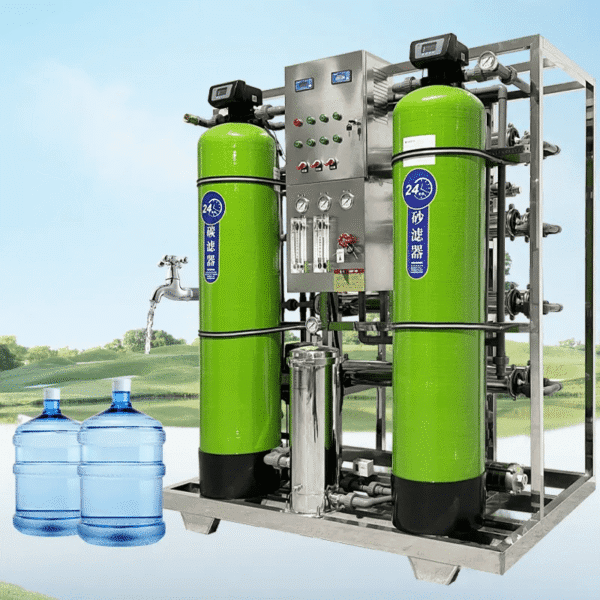
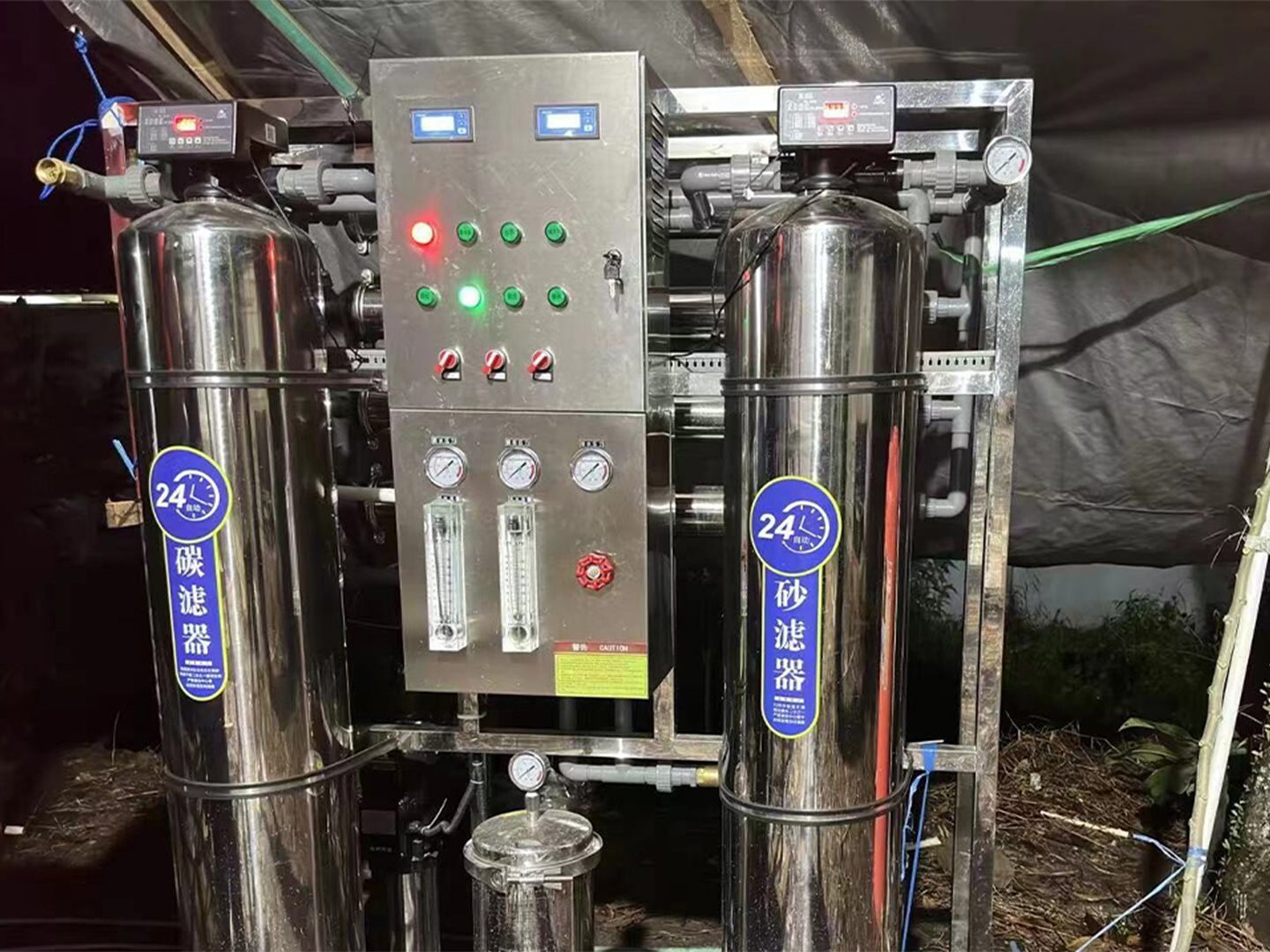
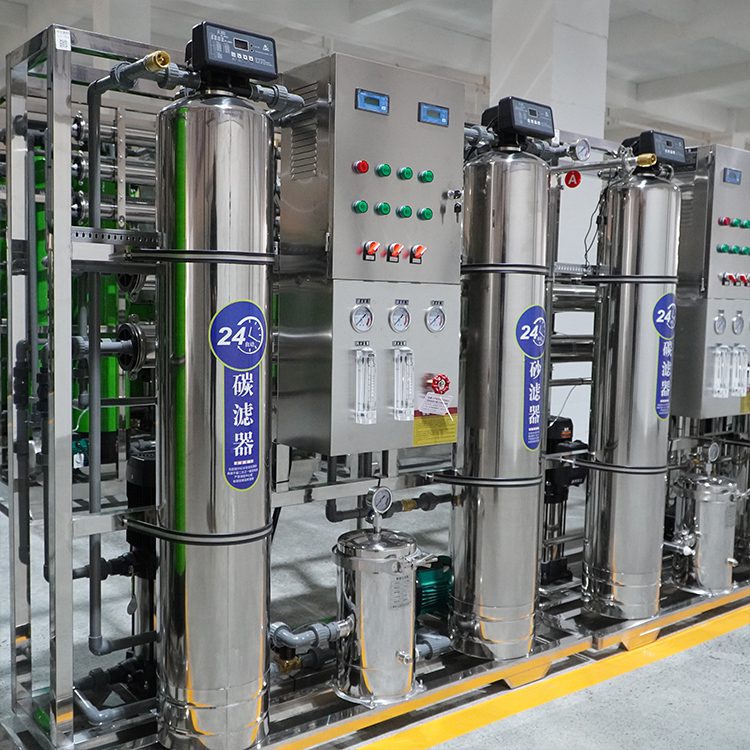
Based on the complete feed water analysis results, a suitable process was selected to protect the reverse osmosis membrane. The final configuration included quartz sand filtration and activated carbon adsorption for pretreatment of the client's water.
Activated carbon: Reduces discoloration and odor in water, as well as some metal ions.
Fine Filtration
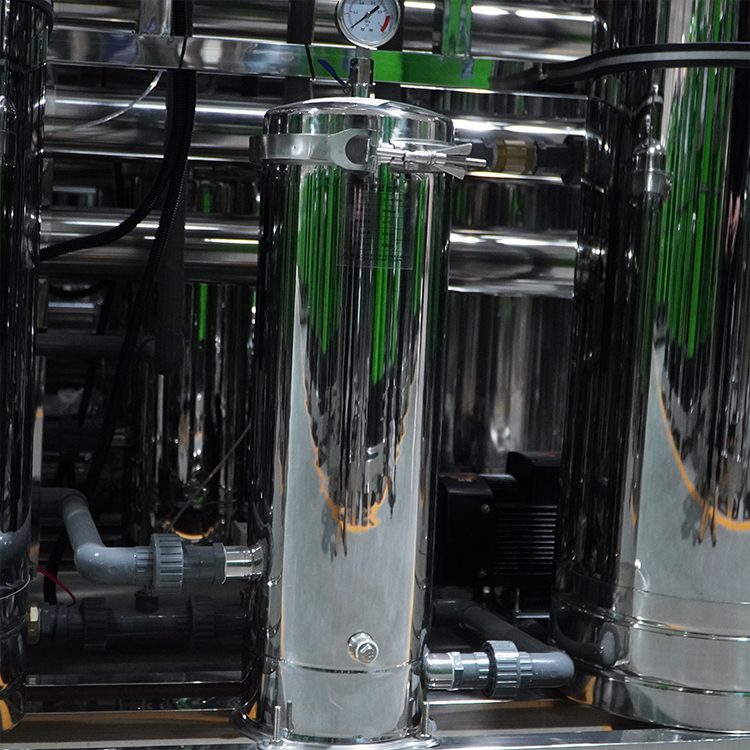
Reduces particle load before the high-pressure pump and membrane section. Cartridge-filter rating and housing size are selected to protect the downstream equipment.
Reverse Osmosis
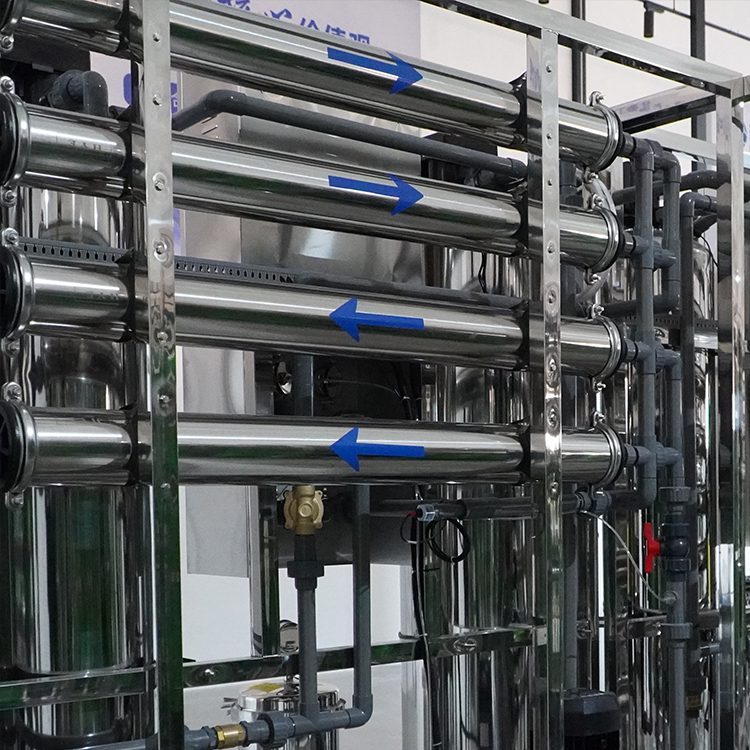
This method reduces dissolved salt content and produces process water required for jam production. Four VONTRON ULP-4040 series membranes are used, arranged in a three-section series configuration.
Although the water production of a single 8040 membrane is the same as that of four 8040 membranes, the recovery rate of a single 8040 reverse osmosis membrane is only 15%.
Final Treatment
Based on product water quality standards and hygiene requirements for jam production, we added a UV disinfection system at the end of the process to further disinfect the water for bacteria and microorganisms, ensuring water safety.
Storage / Supply
Balances production demand and supplies the downstream jam-production process. Tank volume, material, level control and distribution pressure are selected for the operating schedule.
System Configuration
What the 1,000 LPH System Should Document
In this project, the core component brands and materials used in the reverse osmosis system
01
Raw Water Pump
The chosen water pump is from the SHIMAGE brand, with a flow rate close to 4 cubic meters per hour based on the equipment’s flow rate. The head is 0.75 kW/h.
02
Pretreatment System
The quartz sand and activated carbon filtration system effectively reduces water turbidity and removes unpleasant colors and odors.
03
Cartridge Filter
Equipped with a 20-inch 5-micron precision PP cotton filter element and a stainless steel filter housing.
04
High-Pressure Pump
A SHIMAGE brand reverse osmosis pump is used, matched to the 1,000 L/h permeate requirement and the calculated RO operating pressure.
05
RO Membranes
Choose the VONTRON 4040 ULP series module, equipped with 4 RO membrane modules, arranged in a 3-segment series configuration.
06
Product-Water Tank
Select appropriate capacity and materials based on peak production periods and hygiene requirements. (Customer prepares these materials themselves.)
07
Final Treatment
Considering the food processing technology, a UV disinfection system is used at the end for secondary water disinfection. Alternatively, an ozone disinfection system can be used instead.
08
Control & Monitoring
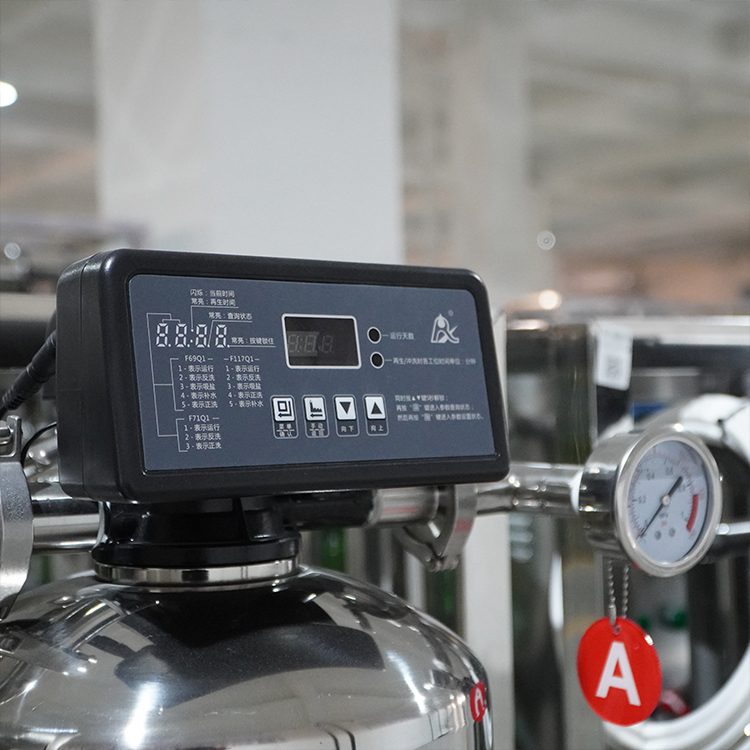
Equipped with an automatic control valve, it enables automatic flushing and monitoring and alarm functions for conductivity, pressure, flow rate, and liquid level control.
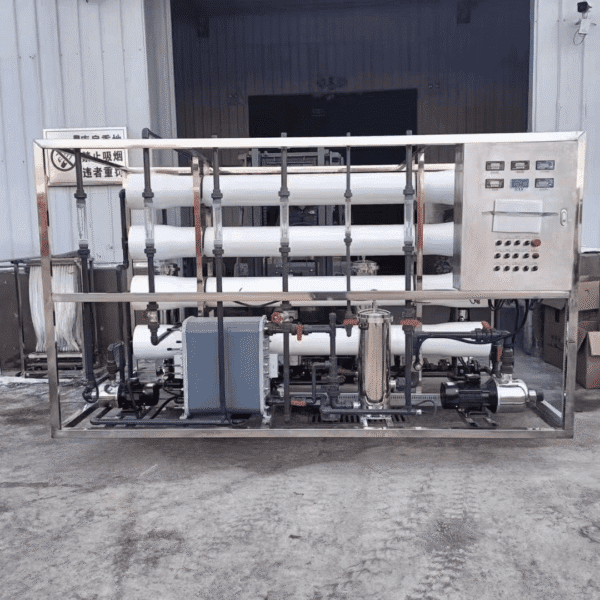
Real Project Photos
Equipment delivery photos and case studies

Project Results
Use Verified Before-and-After Data
Measured Outcome
Document Verified Commissioning Results
The system is already in use in Ghana for jam production. This is based on actual customer feedback data.
High-Purity Process Water for Food Production
Engineered to strictly meet beverage and food processing standards, ensuring exceptional taste and consistent product quality:
- Superior Desalination: TDS reduced from 1,065 ppm down to 9 ppm (99%+ salt rejection)
- Optimal pH Control: Stable output at pH 6.8, ideal for ingredient blending
- Reliable Supply: Continuous flow of 1,000 L/h pure process water
- Ensuring food safety and flavor integrity for food manufacturers in Ghana.
Before-and-After Water Data
| Parameter | Feed Water | Product Water |
|---|---|---|
| TDS | 1,065 ppm | 9 ppm |
| Operating Capacity | 2,000 L/h rated | 1,000 L/h rated |
| PH | PH 7.1 | PH 6.8 |
Project Delivery
From Requirement to Operation
01 · REQUIREMENT
Customer Inquiry
The jam factory, 1000 liters/hour capacity, on-site power supply, and borehole water TDS have been confirmed.
02 · ENGINEERING
Water Analysis & Design
Pretreatment and RO configuration selected from project information.
03 · PRODUCTION
Manufacturing & Testing
System assembly, electrical matching, testing and inspection.
04 · DELIVERY
Installation & Support
Delivery to Ghana, commissioning guidance and technical support.
Planning a Similar Project?
Send Your Water Source, Capacity and Site Voltage
Share your feed-water analysis, required flow, operating hours, final water use and factory electrical supply for a project-specific RO configuration.
Ghana Project Reference
1,000 LPH · Jam Production
1,065 ppm Feed-Water TDS
380 V / 50 Hz · 3-Phase, 5-Wire
Related Project Cases
Continue with Similar Real Projects
Agricultural Irrigation
Agricultural Irrigation-Water Project
1000LPH reverse osmosis system in Kazakhstan used for irrigation of forest seedlings.
Driking
Hotel Central Water Supply Project
2000LPH reverse osmosis purification system used for hotel water supply in Malaysia
Industrial
Industrial Boilers-Water Project
A 5-ton-per-hour water purification system in Australia is used for industrial boilers.