LABORATORY ULTRAPURE WATER PROJECT CASE
4000LPH EDI Ultrapure Water System for Laboratory
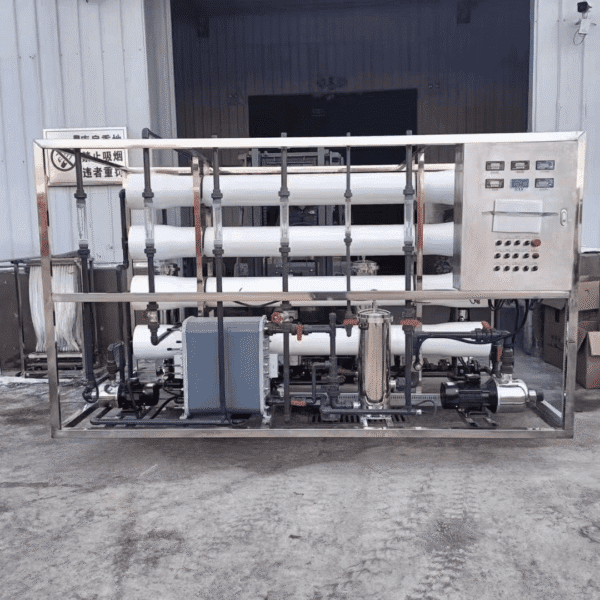
This is a laboratory water project located in South Africa. The system is designed to provide high-purity water (≥5 MΩ·cm) to the entire laboratory. The system has a rated treatment capacity of 4000 liters/hour and uses a three-phase 380V/50Hz power supply. The total dissolved solids (TDS) value of the influent is 1428 ppm.
Country
South Africa
Application
Laboratory
Capacity
6TPH RO+4TPH EDI
Feed-Water TDS
1428 ppm
Site Power
380 V / 50 Hz
Electrical System
Three-phase
Project Overview
Start with the customer's real production requirement
This case study is based on an operational high-purity water project in South Africa with a capacity of 4,000 liters per hour. The system is configured according to the client’s production requirements, with an influent TDS of 1428 ppm and a three-phase 380V/50Hz power supply.
Customer Requirement
Suitable for industrial laboratories
Rated water treatment capacity: 4000 liters/hour
Daily operation: 10 hours
Electrical specifications: Three-phase 380V/50Hz
Skid-mounted design
Easy maintenance; simple consumable replacement
Engineering Focus
The total dissolved solids (TDS) content of the influent alone is insufficient to determine a complete treatment solution. When determining pretreatment, recovery, and membrane configuration, hardness, alkalinity, silica, iron, chlorine, microbial status, and the required final water quality standards should also be considered.
A comprehensive assessment needs to be made by combining existing water quality testing information with factors such as water color and taste.
Customer & Site Information
Verified Project Data for the South Africa Installation
Project Country
South Africa
Customer Industry
Chemical Industry
Product-Water Capacity
4000 L/h (4.0 m³/h)
Feed-Water Source
Surface water
Feed-Water TDS
1428 ppm
Site Voltage
380 V
Frequency
50 Hz
Phase / Wiring
Three Phase
Control Requirement
Automatic
Operating Hours
10 Hour /Day
Final Water Use
Laboratory Water
Project Status
In operation
Treatment Process
Two-Pass RO + EDI Treatment Process
A six-stage treatment process combines pretreatment, precision filtration, two-pass reverse osmosis and EDI, followed by optional polishing and UV disinfection, then storage and supply to the laboratory.
Pretreatment
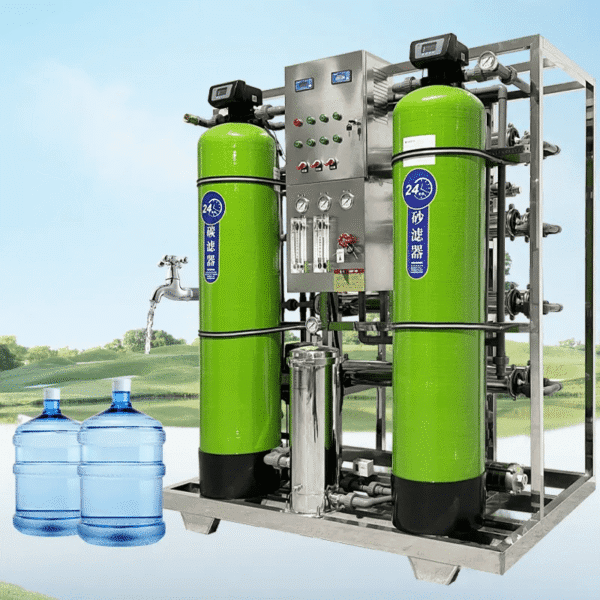
Raw water passes through quartz sand filtration and activated carbon filtration to produce pretreated water for the downstream filtration system.
Precision Filtration
Pretreated water enters the antiscalant dosing system and then passes through the first-stage PP filter before entering the RO section.
Two-Pass Reverse Osmosis
Precision-filtered water passes through the first RO membrane assembly, an intermediate water tank and PP filtration, followed by the second RO pass. The permeate is collected in the RO pure-water tank.
EDI System
RO pure water is delivered by the EDI feed pump through a precision filter to the EDI module. The treated water is collected in the high-purity water tank.
Post-Treatment
High-purity water can pass through an optional polishing mixed bed and optional UV disinfection before the hygienic-water supply stage.
Storage / Supply
Product water is stored in the product-water tank and delivered to the laboratory by the supply pump.
System Configuration
What the 4000 LPH System Should Document
In this project, the core component brands and materials used in the reverse osmosis edi system
01
Raw Water Pump
This project is equipped with two raw water shimmering pumps, one for pretreatment and one for the EDI module. The core function is to provide a stable water supply for the RO and EDI systems.
02
Cartridge Filter
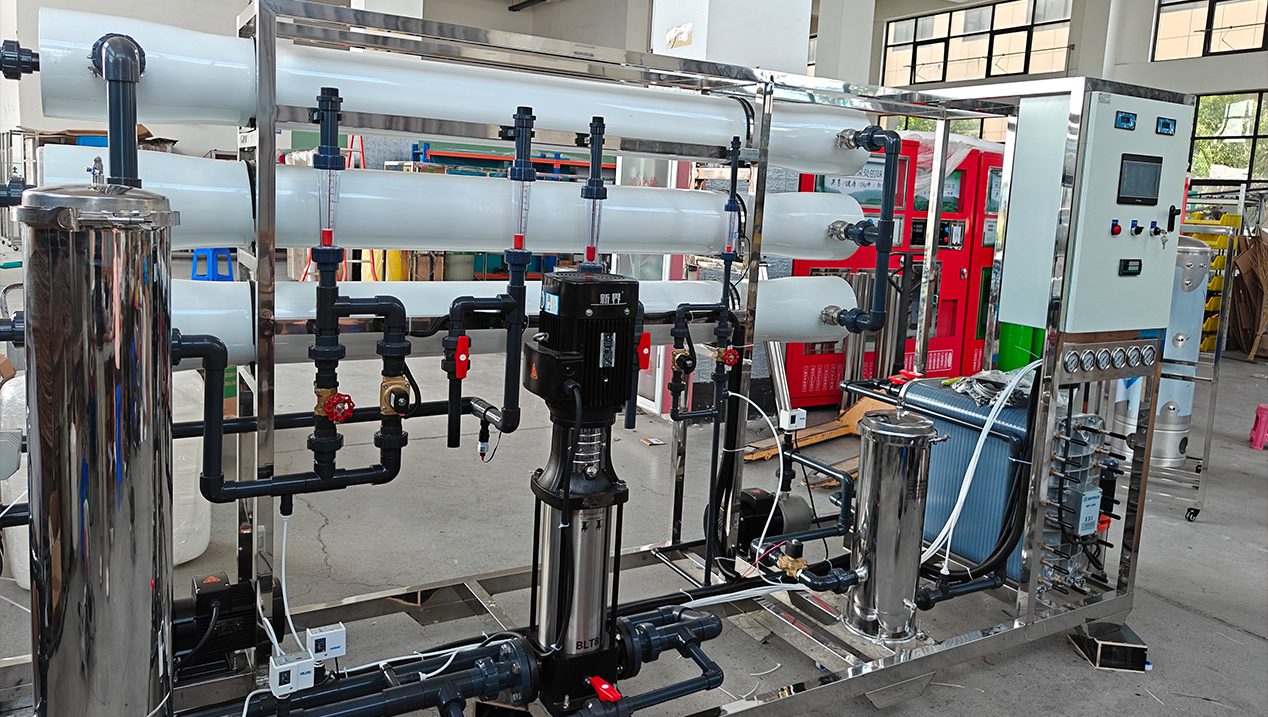
Before the primary and secondary reverse osmosis membrane modules, and before water enters the EDI module, 5-micron precision PP cotton filters are used to better protect downstream equipment.
03
High-Pressure Pump
The water pump uses the renowned SHIMAGE pump, providing sufficient inlet pressure for both the primary module and the secondary membrane module.
04
RO Membranes
The Ovay 8040 ULP series modules, equipped with 10 RO membrane modules, are selected, and the modules are arranged in a configuration of two modules connected in series with a single membrane housing.
05
EDI Module
It adopts a high-quality, highly stable electro-deionization module, making it safer and more environmentally friendly.
06
Post Treatment
For the back-end treatment of EDI effluent, a UV sterilizer can be used in conjunction. For applications requiring high and stable resistivity, it is recommended to add a polishing resin mixed-bed process to improve the high resistivity and stability of the produced water.
07
Control & Monitoring
It can achieve automatic flushing, monitoring and alarm functions, and is used to control conductivity, pressure, flow rate and liquid level.
08
Product-Water Tank
It is equipped with an automatic control valve, enabling automatic flushing, monitoring, and alarm functions. It also features a PLC control system, facilitating the implementation of more complex logic controls in the future.
Real Project Photos
Equipment delivery photos and case studies
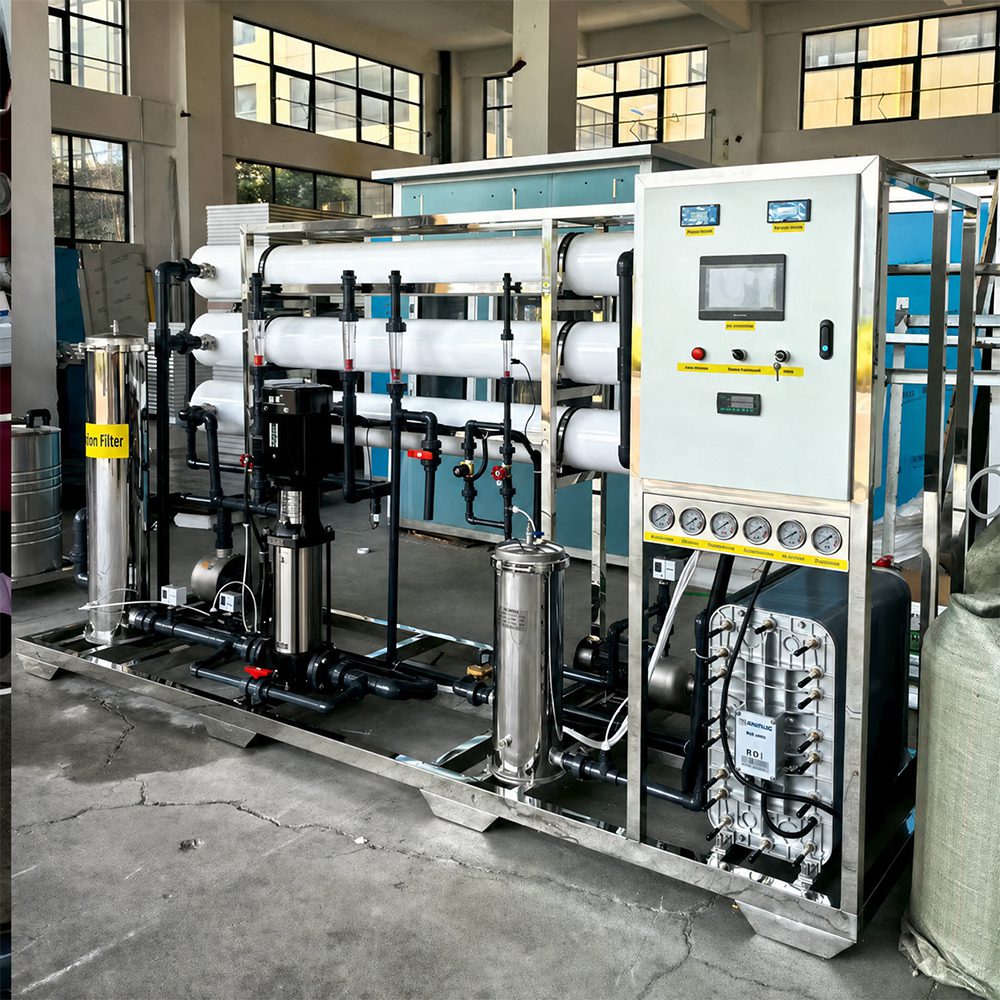
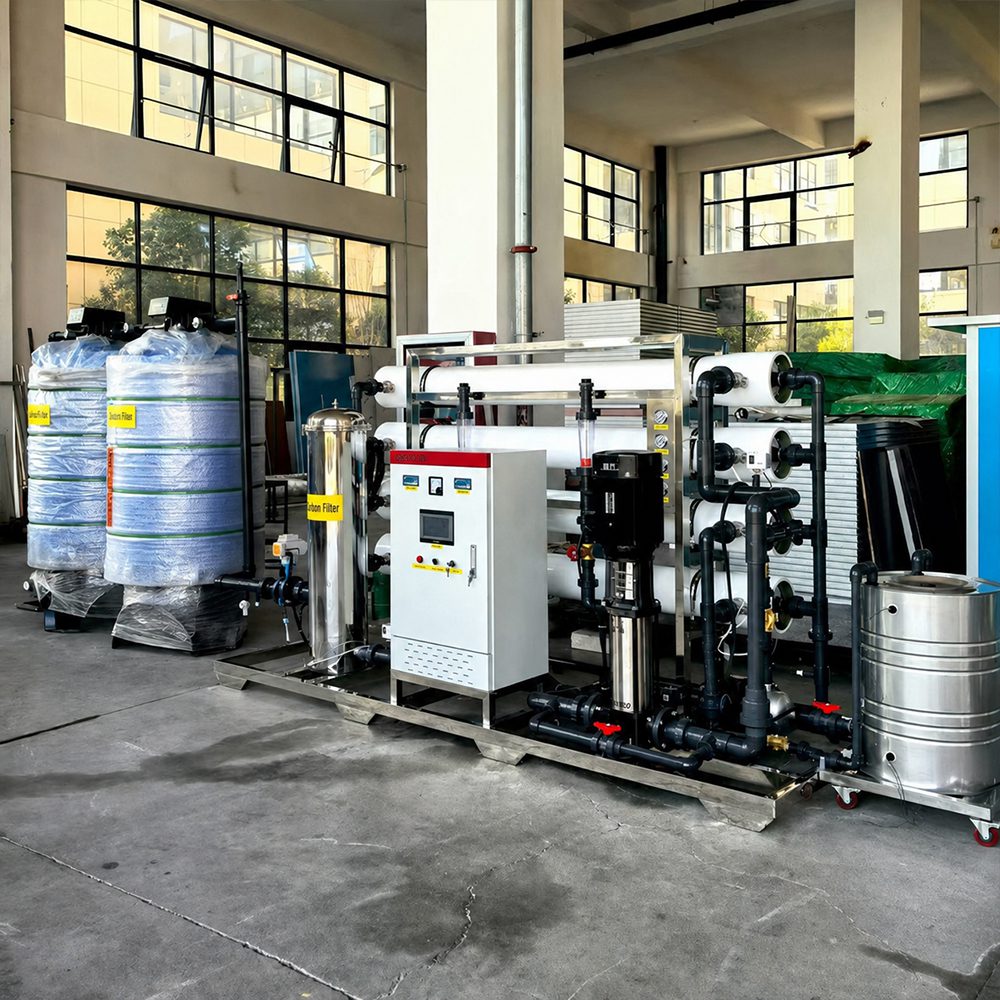
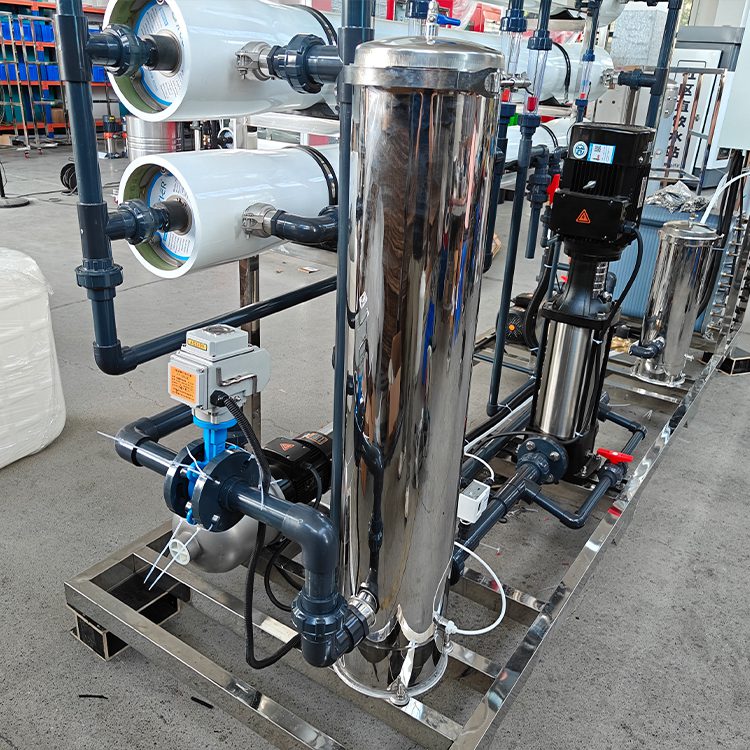
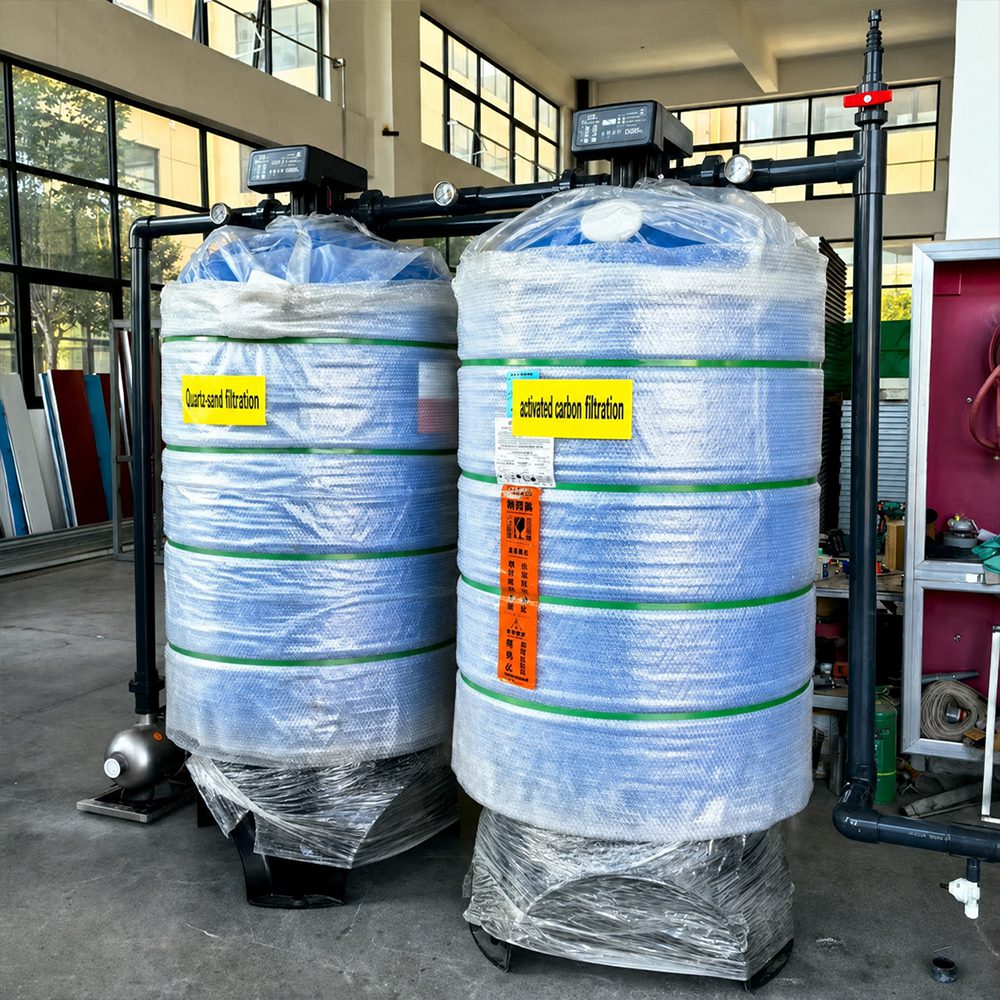

Project Results
Use Verified Before-and-After Data
Measured Outcome
Document Verified Commissioning Results
The system has been used in the factory laboratory in South Africa. This conclusion is based on actual customer feedback data.
Uncompromised Water Purity for Precise Analytical Testing
Mineral impurities in high-TDS feed water can cause analytical baseline drift and damage sensitive laboratory equipment.
- Ultra-Pure Quality: 9 MΩ·cm high resistivity guarantees zero ionic interference in laboratory processes.
- Equipment Protection: Protects delicate analyzers and testing systems from scaling and fouling.
- Verified Field Performance: Operating in South African industrial facilities with real customer feedback.
Before-and-After Water Data
| Parameter | Feed Water | Product Water |
|---|---|---|
| TDS / Resistivity | 1428 ppm | 9 MΩ·cm |
| RO Operating Capacity | 8000 L/h rated | 6000 L/h rated |
| PH | PH 7 | PH 6.8 |
Project Delivery
From Requirement to Operation
01 · REQUIREMENT
Customer Inquiry
The industrial laboratory requires a capacity of 4000 liters of purified water per hour (≥5 MΩ·cm). The on-site power supply and the TDS values of the surface water have been confirmed.
02 · ENGINEERING
Water Analysis & Design
Select the pretreatment, two-stage reverse osmosis, and EDI configuration based on the project information.
03 · PRODUCTION
Manufacturing & Testing
System assembly, electrical matching, testing and inspection.
04 · DELIVERY
Installation & Support
Delivery to Angola, commissioning guidance and technical support.
Planning a Similar Project?
Send Your Water Source, Capacity and Site Voltage
Share your feed-water analysis, required flow, operating hours, final water use and factory electrical supply for a project-specific edi configuration.
South Africa Project Reference
4000 LPH · Ultrapure Water
1428 ppm Feed-Water TDS
380 V / 50 Hz · Three-Phase
Related Project Cases
Continue with Similar Real Projects
Commercial
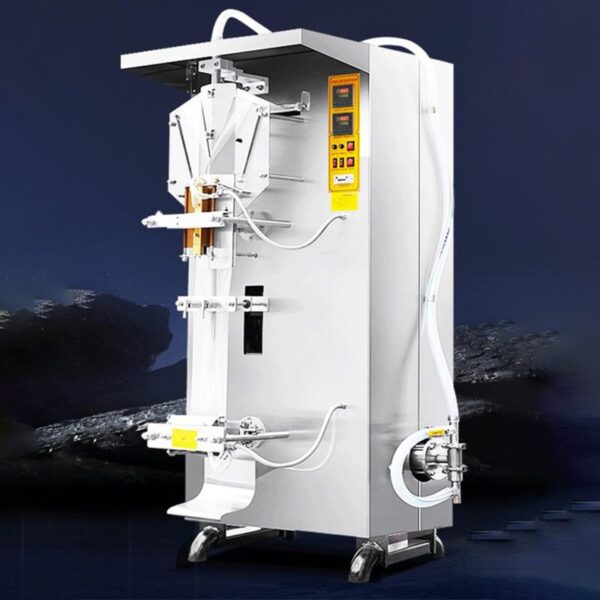
Sachet Water Production Project
Angolan 500LPH tap water purification system used for sachet water production
Driking
Hotel Central Water Supply Project
2000LPH reverse osmosis purification system used for hotel water supply in Malaysia
Industrial
Industrial Boilers-Water Project
A 5-ton-per-hour water purification system in Australia is used for industrial boilers.