Industrial & Commercial Reverse Osmosis Systems
Configurable industrial and commercial reverse osmosis systems for municipal water, groundwater and brackish water treatment—engineered around feed-water quality, required capacity, operating conditions and target product-water quality.
Years of Experience
Countries Served
Customer Satisfaction
01 · WATER CHALLENGE
Start with the water—not the machine.
Select the water source, observe the water quality, and specify the required treatment capacity and application scenario. The page will then provide reference information and a process flow for the project.
Explore treatment options for municipal water supply covering residual chlorine, hardness and stable pretreatment before RO.
02 · TREATMENT PROCESS
Configurable Industrial & Commercial RO Treatment Process
The following process represents a common preliminary treatment scheme for a selected water source.
Current project summary
Preliminary configuration based on your selections. Final equipment selection requires a water analysis and engineering review.
Current Treatment Process
Your preliminary treatment process based on the options selected above.
Main process order: Raw Water → PP Cartridge Filter (5 μm / 1 μm) → High-Pressure Pump (LEO / SHIMGE / CNP / Other) → RO Membrane (OVAY / VONTRON / Other) → Pure Water
Select optional equipment to explore your treatment requirements. The final process will be confirmed after reviewing your water analysis and project requirements.
Example RO Treatment Sequence
Illustrative path for the current default selections: clear, dechlorinated municipal feed water, below 1,000 L/H, for commercial drinking-water use. Actual water analysis may require additional stages.
- Cartridge filtration. A PP cartridge filter removes fine particles before the membrane section.
- Pressurization. A high-pressure pump supplies the pressure required by the RO membranes.
- Reverse osmosis. RO membranes produce treated water for the specified application.
If residual chlorine is present, remove it before chlorine-sensitive RO membranes. Softening, disinfection and other stages depend on feed-water analysis and the target use.
How to Size & Configure Your Industrial RO System
Use these four steps to prepare a project brief for engineering review.
- Analyze the feed water. Test TDS, hardness, silica, pH, residual chlorine and contaminants relevant to the source.
- Define demand and target quality. Record peak hourly flow, operating hours and the required product-water specification.
- Select pretreatment and RO configuration. Match filtration, scale control, membrane arrangement and recovery target to the test results.
- Confirm post-treatment and operation. Add UV, ozone, remineralization or EDI only when the application requires it; validate the final design with an engineer.
03 · MEDIA DESCRIPTION
Explore Key Water Treatment Technologies
Click a module to view a simple equipment preview, function and common system position.
PRETREATMENT
CORE TECHNOLOGY
POST-TREATMENT
OTHER SYSTEMS
Multimedia Filtration
Reduces suspended solids and protects downstream equipment.
Multimedia filtration is commonly installed at the beginning of an industrial water treatment system. Layers of graded media help reduce sediment, rust, suspended solids and turbidity before the water reaches finer filtration or membrane stages. By lowering the particle load, this stage helps protect activated carbon filters, cartridge filters, pumps and RO membranes from premature blockage. Backwashing can be configured manually or automatically according to raw-water quality and system capacity.
04 · RELEVANT PROJECT / APPLICATION INQUIRY
Turn a real project into a structured inquiry
Free Engineering Consultation
Our water treatment experts are ready to support your project from design to commissioning.
- System configuration & process design
- Equipment selection & technical proposal
- Drawings, datasheets and documentation
- Global shipping and on-site support
Typical Response Time
Within 24 hours
(working days)
Technical questions?
jack@aquaclarion.com
05 · FAQ
Frequently Asked Questions
Can one RO system design work for every commercial or industrial project?
No. The same nominal output can require different pretreatment and membrane arrangements for municipal water, groundwater, or brackish water. We review the feed-water analysis, required product-water quality, production capacity, and operating schedule before confirming the system configuration.
What information is needed for a quotation?
Please provide the installation country, feed-water source, required product-water flow in L/h or m³/h, planned operating hours per day, application, and target water quality. If available, include a recent water-analysis report with TDS, hardness, iron, manganese, and silica results. This information helps us prepare a more relevant configuration and quotation.
Can I request a quotation without a water analysis report?
Yes. You can start an inquiry with your water source, project location, estimated capacity, operating hours, application, and target water quality. We can then identify which water-quality tests are needed. The final pretreatment and membrane configuration should be confirmed after the feed water has been assessed.
Can pretreatment, UV or ozone be integrated with the RO system?
Yes. The treatment line can integrate multimedia filtration, activated carbon, softening, antiscalant dosing, cartridge filtration, RO, UV, ozone and other modules when they are justified by the water quality and application.
What capacity ranges are available?
Our published configurations include nominal product-water capacities of 500–1,000, 2,000–3,000 and 4,000–5,000 L/h. The appropriate size depends on required daily output, operating hours, feed-water analysis and target water quality. Larger projects require a project-specific design.
Are these standard RO models or systems configured for each project?
This page presents a configurable industrial and commercial RO system range. Capacity, pretreatment, membrane arrangement, pumps, piping, controls, and optional post-treatment are selected according to the water analysis and project requirements. The linked capacity pages show typical configurations; the final design is confirmed for each project.
Explore Systems by Capacity
These published capacity series are reference examples, not a quotation or a final equipment list calculated from the selector above. Pretreatment, membrane arrangement and performance are confirmed after reviewing feed-water analysis and project requirements.

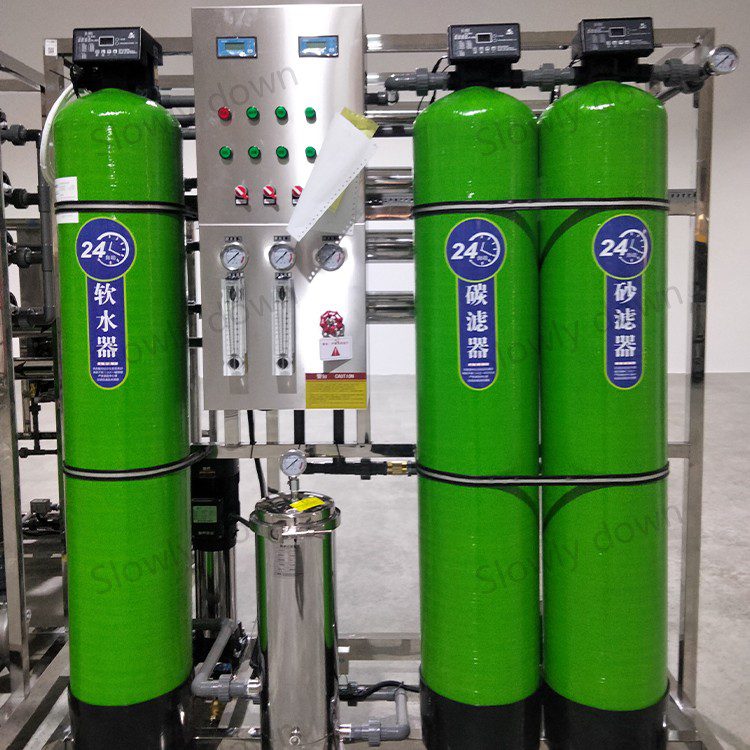
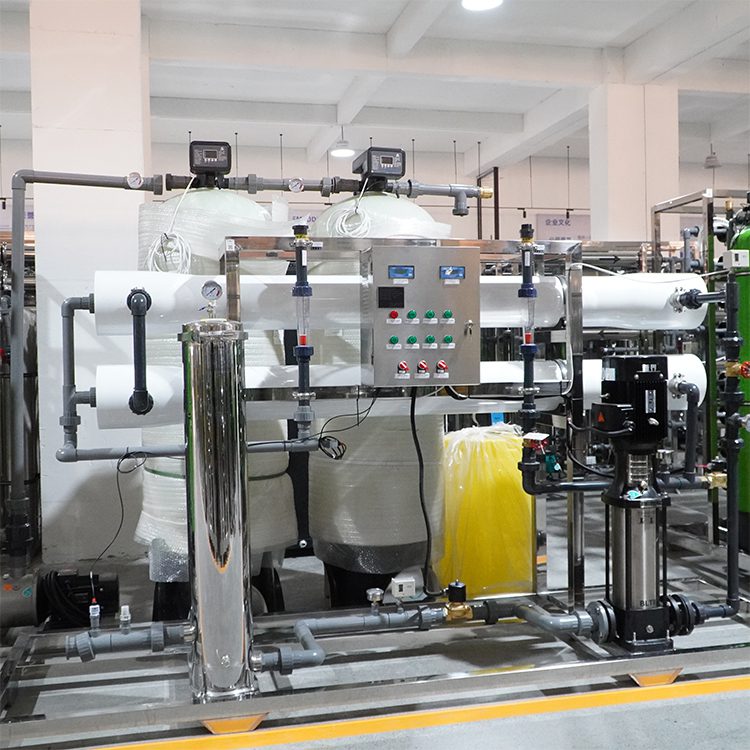
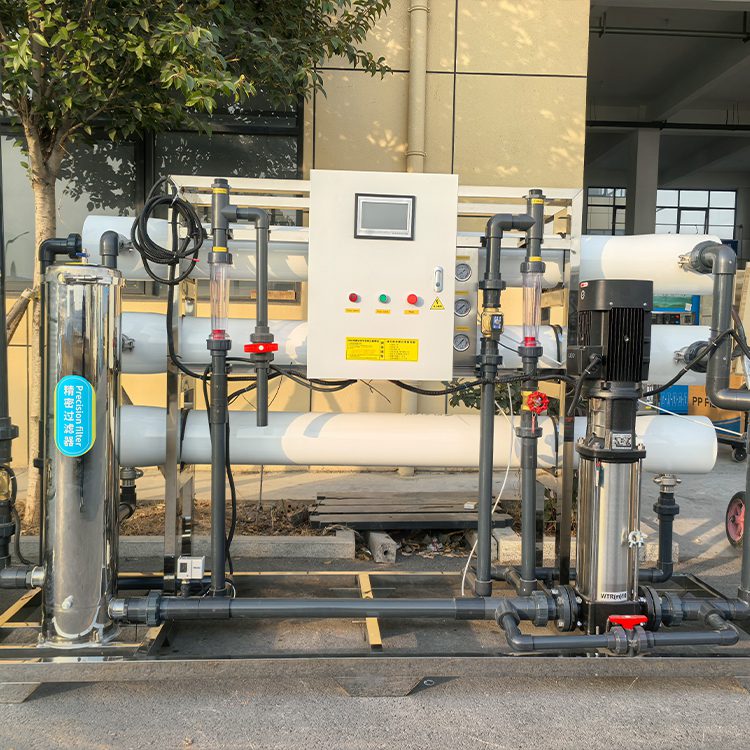
| Nominal product-water output | Indicative RO membrane format | Membrane housing material | RO stage | Product details |
|---|---|---|---|---|
| 0.5–1 m³/h | 4040 elements are typically used | Stainless steel | FRP | Single-pass concept; double-pass available when required | 0.5–1 m³/h systems |
| 2–3 m³/h | Multiple 4040 elements or an 8040 configuration | Stainless steel | FRP | Single-pass concept; double-pass available when required | 2–3 m³/h systems |
| 4–5 m³/h | 8040 configuration | Stainless steel | FRP | Single-pass concept; double-pass available when required | 4–5 m³/h systems |
For other or larger capacities, request an engineered solution.
READY TO GET STARTED?
Let’s Build Your Water Solution
Talk to our team and get a tailored reverse osmosis system for your project.
Global Service
Reliable Quality
Long-term Partner