RO OPERATION & MAINTENANCE GUIDE
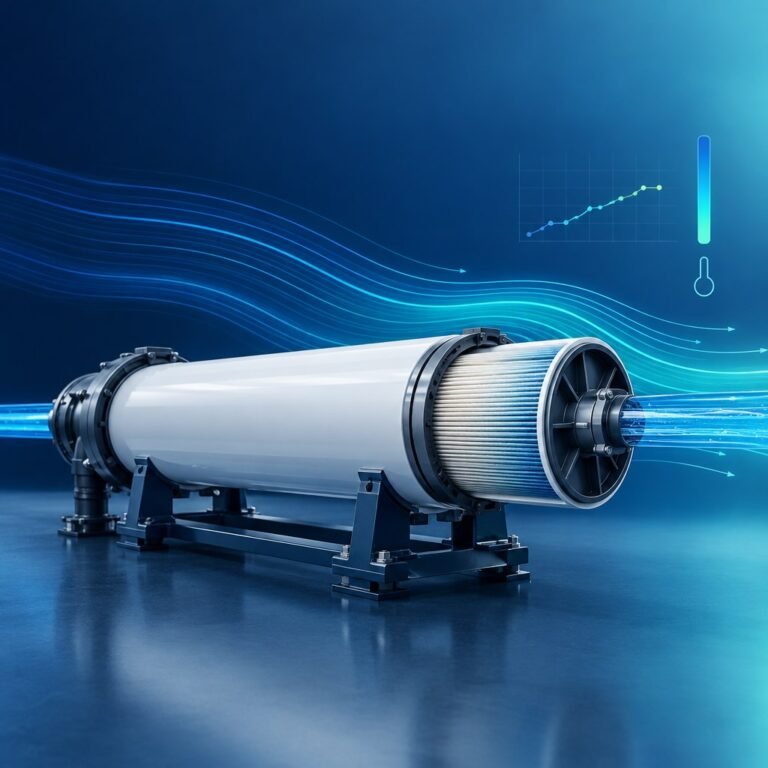
RO Membrane Scaling: Carbonate, Sulfate, Phosphate and Silica
A practical comparison of four inorganic scale types, their warning signs, prevention measures and cleaning difficulty.
In many cases, the culprit is scaling.
The basic job of an RO membrane is to remove non-dissolved impurities from water—especially inorganic salts. But once raw water enters the RO membrane, the dissolved salts get progressively concentrated. If the slightly soluble or sparingly soluble salts in the water exceed their saturation concentration, they form crystals and deposit on the membrane surface. That’s inorganic scaling.
Scaling is especially likely to occur under these conditions:
- High water hardness
- High alkalinity
- High water temperature
- Slow flow rate, or sudden changes in flow rate
Inorganic scaling is a common problem in RO membrane operation. That’s why RO pretreatment must not only remove non-dissolved impurities thoroughly, but also ensure adequate softening and scale inhibition. During operation, you need to maintain a reasonable recovery rate to control the concentration factor of slightly soluble and sparingly soluble salts, while also ensuring proper flow velocity for both feed and concentrate in the membrane system.
Below, we’ll walk through the four most common types of inorganic scaling, one by one.
1. Carbonate Scaling — The Most Common “White Scale”
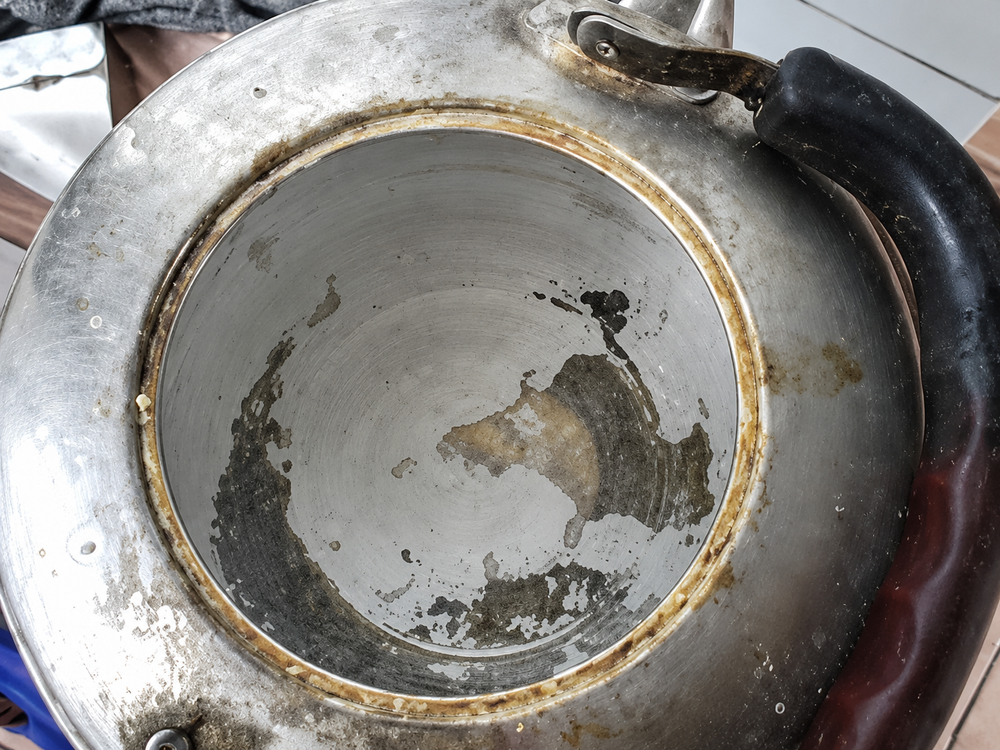
Carbonate scaling is the most common type of scaling in reverse osmosis membranes.
How to identify it?
- Membrane elements with carbonate scaling will increase in weight. In severe cases, you can see white or grayish-white deposits on the outside of the element, with carbonate particles on the end face. Adding hydrochloric acid will produce CO₂ bubbles (reaction: CaCO₃ + HCl → CaCl₂ + H₂O + CO₂↑).
- Once carbonate scaling occurs, both permeate flow and salt rejection decrease simultaneously.
How to prevent it?
- Strengthen feed water softening to reduce calcium hardness
- Dose antiscalant
- Lower the recovery rate
- Increase concentrate flow velocity
How to clean it?
| Contaminant | Recommended Cleaning Solution | Cleaning Notes |
|---|---|---|
| Carbonate deposits | 0.2% hydrochloric acid (preferred) | 20–40°C, pH = 2, soak, circulate |
| Carbonate deposits | 2.0% citric acid | 20–40°C, pH ≥ 2, soak, circulate |
2. Sulfate Scaling — Hard and Difficult to Clean
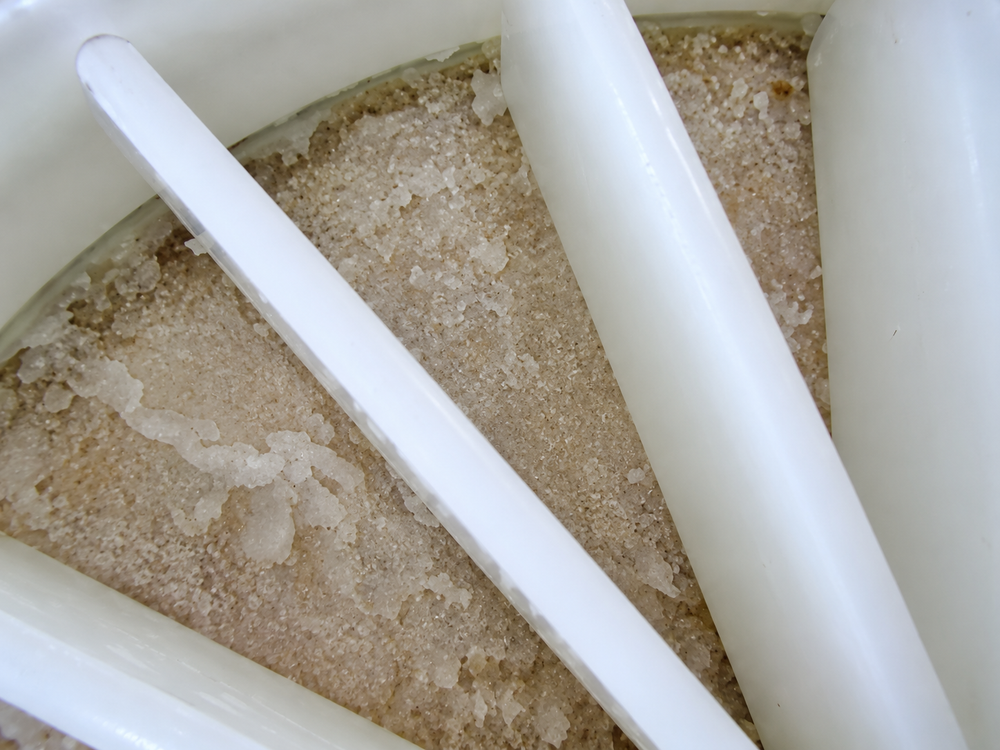
Sulfate scaling is mainly calcium sulfate scale. Calcium sulfate is a yellowish-white, hard, dense solid. It usually doesn’t form scale on its own, but rather mixes in with calcium carbonate scale.
How to identify it?
- Membrane elements with sulfate scaling are heavier than normal. In severe cases, you can see feed flow channels blocked by deposits on the element end face.
- Once sulfate scaling occurs, both permeate flow and salt rejection decrease simultaneously.
How to prevent it?
- Strengthen feed water softening to reduce calcium hardness
- Dose antiscalant
- Lower the recovery rate to reduce the concentration factor
- Increase concentrate flow velocity
How to clean it?
Sulfate scaling is one of the more difficult types of inorganic scaling to clean. Even after cleaning, membrane performance is hard to restore. That’s why prevention matters far more than cleaning.
3. Phosphate Scaling — A Problem Specific to Certain Water Sources
Phosphate content in natural water bodies is very low, so phosphate scaling generally doesn’t form. However, it can easily occur in these water sources:
- Phosphorus-containing municipal wastewater
- Water sources dosed with phosphorus-containing chemicals
- Various complex water sources
How to identify it?
Phosphate scale is grayish-white and relatively loose in texture. It looks similar to carbonate scale and often mixes with a certain amount of carbonate scale.
How to prevent it?
- Add a phosphorus removal process in pretreatment
- Dose a suitable antiscalant
- Lower the recovery rate
- Increase concentrate flow velocity
How to clean it?
The cleaning method is basically the same as for carbonate scale.
4. Silica Scaling — The Most Troublesome “Hidden Killer”
Silica scaling includes SiO₂ scale and silicate scale. The former is amorphous scale; the latter mainly refers to magnesium silicate scale.
How to identify it?
Even very slight silica scaling on a membrane element can cause significant performance decline: extremely low permeate flow and very poor salt rejection.
How to prevent it?
- Adjust feed pH to below 7 or above 7.8, and appropriately increase feed temperature to boost SiO₂ solubility
- Use dual-alkali hardness removal and softening
- Lower the recovery rate
- Dose a suitable antiscalant
- Typically, without antiscalant dosing, the maximum allowable concentration at the concentrate end is 100 ppm
How to clean it?
Once silica scaling forms, it is very difficult to clean, and membrane performance is very hard to restore. That’s why, for silica scale, prevention is far more important than cleaning.
Bottom Line
The four types of inorganic scaling differ in characteristics and difficulty:
- Carbonate scaling: Most common, bubbles when hydrochloric acid is added, relatively easy to clean.
- Sulfate scaling: Yellowish-white, hard, difficult to clean, performance hard to restore.
- Phosphate scaling: Only in specific water sources, loose texture, cleaning method same as carbonate.
- Silica scaling: Most troublesome, even slight scaling causes major performance decline, extremely difficult to clean.
Core principle: For inorganic scaling, prevention is far more important than cleaning. Do these four things well — proper pretreatment softening, dosing the right antiscalant, maintaining a reasonable recovery rate, and ensuring adequate concentrate flow velocity — and you’ll greatly reduce the risk of scaling.
If you’re struggling with RO membrane scaling, or want to learn about scale inhibition solutions for your water quality, feel free to contact us. We can help you develop the most suitable prevention and cleaning strategy based on your water analysis report.
Need Help Preventing RO Scale?
Share your source-water analysis and operating conditions with AquaClarion. We can help review pretreatment, antiscalant selection and recovery targets for your system.