RO Feedwater Quality Guide
What Does SDI Tell You About RO Feed Water?
A plain-language guide to the Silt Density Index: what it measures, how the 15-minute test works, how to read the result, and what else to check before feeding an RO system.
If you’ve dealt with reverse osmosis systems, you’ve probably heard the term SDI often.
Suppliers will ask: “What’s your feed water SDI?” Technical proposals will state: “Requires SDI₁₅ < 5.” But what exactly is SDI? Why is it so important?
Today we’ll explain SDI clearly in plain language. The article isn’t long, but after reading it, you’ll understand why it’s the “first checkpoint” for judging RO feed water quality.
What Exactly Is SDI?
SDI stands for Silt Density Index, and some people also call it the Fouling Index (FI).
Simply put, SDI is an important indicator characterizing the feed water quality of a reverse osmosis system, and it is also the best method for judging the degree of colloidal and particulate contamination in reverse osmosis feed water.
In plain language: SDI is a number used to measure how much “dirt” (colloids, particulate matter) is in your feed water. The lower the value, the cleaner the water; the higher the value, the dirtier the water, and the greater the risk of RO membrane blockage.
The specific standard test method for SDI values is described in detail in the American ASTM TEST (4189-95) document.
How Is SDI Measured?
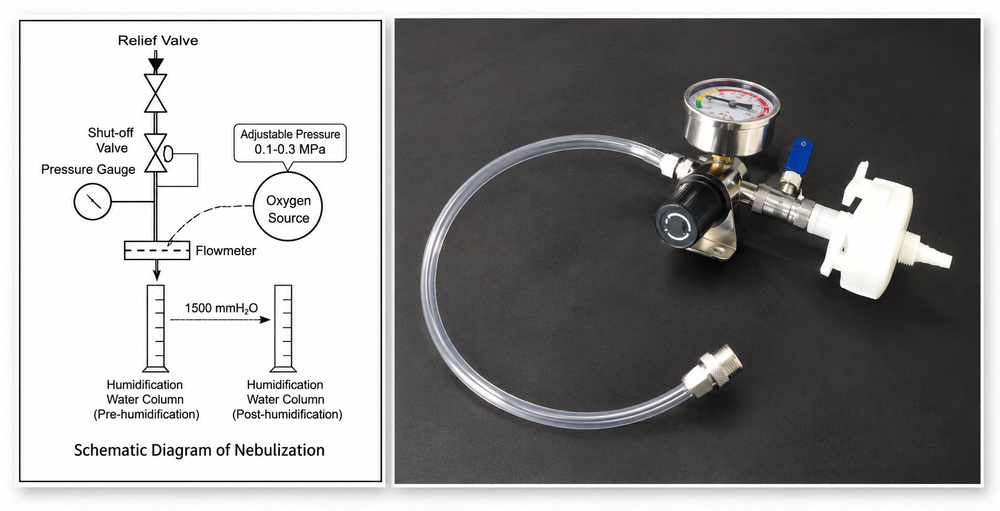
The SDI test method is actually not complicated. The core idea is: let water pass through a filter membrane with a specific pore size, and see how quickly the membrane gets clogged.
The specific steps are as follows:
Step One: Install the Membrane Disc
Take a test filter membrane disc with a diameter of 47 mm and a pore size of 0.45 μm, and place it into the test holder. Note that the front side of the membrane disc must face upward. Tighten the seal and place the test holder vertically.
Step Two: Measure the Initial Time T₀
Adjust the feed pressure to 2.1 bar (30 psi), and immediately measure the time required for 500 milliliters of water to pass through the filter membrane, recording it as T₀.
Step Three: Continuous Filtration for 15 Minutes
Maintain a constant pressure of 2.1 bar and continue filtering for 15 minutes.
Step Four: Measure the Final Time T₁
Again measure the time required for 500 milliliters of water to pass through the filter membrane, recording it as T₁.
How Is SDI Calculated?
After measuring T₀ and T₁, use the following formula to calculate the SDI value of the feed water:
SDI = [1 – (T₀/T₁)] × 100 / 15
From this formula, we can see:
When T₀/T₁ = 0 (that is, when T₁ is infinitely large), SDI₁₅ reaches its maximum value of 6.7.
In other words, the maximum value of SDI is 6.7—it cannot go any higher.
What SDI Value Is Acceptable?
This is the question everyone cares about most.
Feed water requirement for reverse osmosis systems: SDI₁₅ < 5
What does this mean? When SDI₁₅ = 5, T₁ is 4 times T₀. In other words, after 15 minutes of filtration, the filter membrane is clogged to the point where only one-quarter of the original water flow can pass through.
Generally, when the RO system feed water SDI₁₅ value is < 3, the contamination risk of the RO membrane system is relatively low.
So you can simply remember:
| SDI₁₅ Value | Contamination Risk | Explanation |
|---|---|---|
| < 3 | Relatively low | RO membrane operation is relatively safe |
| 3 ~ 5 | Medium | Needs attention; strengthen pretreatment |
| > 5 | Relatively high | Not acceptable; pretreatment must be improved |

Why a Good SDI Value Is Only One Check
Here, we need to emphasize one point in particular:
A sufficiently low feed water SDI is a necessary condition for ensuring stable RO operation, but it is not a sufficient condition.
What does that mean? It means:
A low SDI is one of the conditions that must be met for stable RO operation.
But a low SDI does not mean the RO system will definitely have no problems.
In addition to SDI, you also need to pay attention to other indicators, such as:
- Turbidity
- COD (Chemical Oxygen Demand)
Therefore, when judging RO feed water quality, you cannot look at SDI alone—you need to evaluate multiple indicators together.
Key Takeaways
When it comes to SDI, remembering these points is enough:
- What SDI is: an indicator measuring the degree of colloidal and particulate contamination in feed water; the lower the value, the better.
- How to measure it: pass water through a 0.45 μm filter membrane, measure the times for 500 mL to pass initially and after 15 minutes, and plug them into the formula.
- Acceptable standard: RO feed water requires SDI₁₅ < 5; when < 3, contamination risk is relatively low.
- Important reminder: meeting the SDI standard is a necessary condition but not a sufficient condition—you also need to check turbidity, COD, and other indicators.
If you have questions about RO feed water quality, or would like to know how to improve your SDI value, please feel free to contact us anytime. Based on your water quality analysis report, we can help you assess whether your pretreatment solution is adequate.
Need to Lower Your RO Feedwater SDI?
Share your feedwater analysis and current pretreatment setup. AquaClarion can help assess particulate fouling risk and choose suitable filtration before the RO membranes.
Discuss Your Pretreatment Project